Cart
0
You may also like

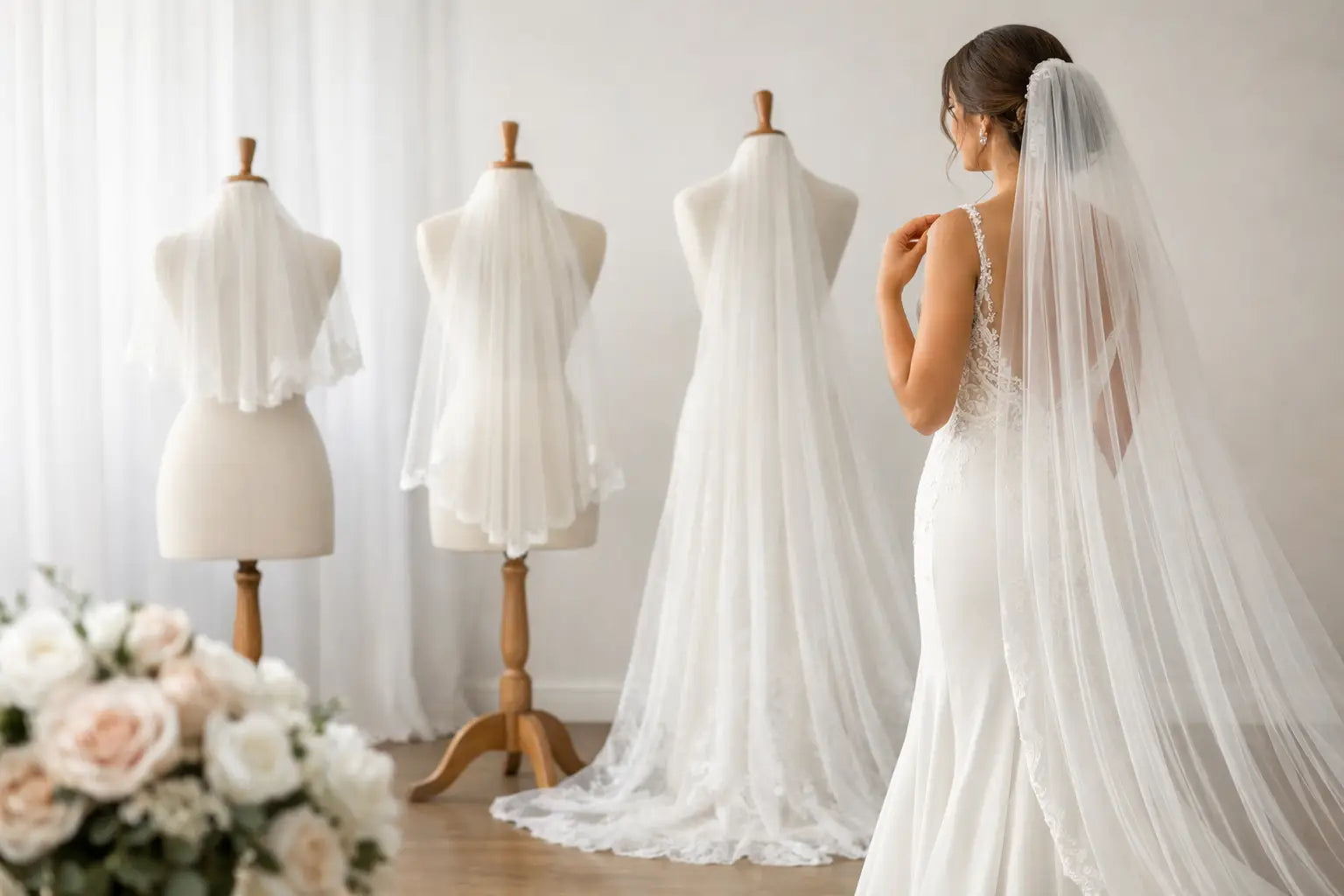
The veil can turn a beautiful wedding dress into a full bridal moment - but only when the proportions feel right. Knowing how to match veil length is less about following a strict rule and more about letting your gown, venue and personal style lead the decision. The right veil should frame your dress rather than compete with it, and feel comfortable enough that you can enjoy every hug, photo and dance.
Before trying on veils, take a good look at your dress from every angle. Its silhouette, train, fabric and embellishment all influence the length that will look most natural.
A fitted crepe gown with clean lines can carry almost any veil length, from a simple shoulder veil to a dramatic cathedral style. Because the dress itself is understated, a longer veil can add softness and occasion without making the look feel busy. If your gown has bold lace, beading, statement sleeves or a detailed back, the veil needs more careful consideration. You may prefer a sheer veil that lets those features show through, or a shorter length that finishes above the most important details.
Ball gowns and fuller A-line wedding dresses often suit longer veils beautifully. The volume of the skirt creates balance, so a small veil can sometimes get lost behind it. A chapel or cathedral veil can extend the drama of a full skirt, particularly for a formal ceremony. On the other hand, a tea-length or shorter wedding dress generally looks best with a shorter veil that keeps the overall outfit light and playful.
Your dress train is a particularly useful guide. A veil that ends just before, at, or beyond the train can create a considered finish in photographs. It does not have to match the train exactly, though. Sometimes a veil that falls a little longer gives the gown a more dramatic silhouette, while a veil that stops at waist or fingertip length keeps attention on a spectacular train.
There is no single ‘correct’ veil for every bride, but understanding the common lengths makes narrowing down your options far easier.
A birdcage veil sits over part of the face and is ideal for brides who want a fashion-forward, vintage-inspired detail without a traditional long veil. It works especially well with a chic mini dress, tea-length gown, tailored bridal suit or simple satin silhouette.
A blusher is the layer worn over the face before the ceremony. It can be added to many veil lengths and brings a classic, romantic touch. If having a blusher matters to you, let your stylist know early, as it will affect how the veil is secured and styled with your hair.
Short veils are a lovely choice for relaxed celebrations, intimate weddings and dresses with standout skirt details. A shoulder-length veil usually finishes around the shoulders, while an elbow veil falls closer to the waist or elbows.
These lengths suit brides who want the tradition of a veil without covering the back of their gown. They are also practical if you are planning a more casual reception, have a detailed bodice, or simply prefer a lighter feel. With a full skirt, however, a very short veil can appear disconnected, so try it on with the gown rather than deciding from a hanger.
Fingertip veils are popular for good reason. They are versatile, romantic and long enough to feel bridal without becoming difficult to manage. As the name suggests, this style generally falls to your fingertips when your arms are relaxed by your side.
It suits most dress silhouettes, including A-line, fit-and-flare and softer ball gowns. Fingertip length is particularly useful when your dress has no train or only a small train, as it adds movement without overtaking the dress. If your gown has detailed lace or beading at hip level, choose a plain tulle veil so the textures do not clash.
Long veils create an unforgettable entrance. A waltz veil falls around mid-calf to ankle length and is a beautiful middle ground for brides wanting flowing movement without a train to manage. Chapel veils extend to the floor or slightly beyond, while cathedral veils are the longest and most formal option.
These styles are stunning with gowns that have a train, particularly at churches, formal venues and spacious outdoor ceremony settings. They are also made for photographs - the movement as you walk down the aisle can be extraordinary. The trade-off is practicality. Longer veils can be caught under shoes, stepped on by guests and need adjusting before portraits or dancing. Many brides remove theirs after the ceremony, which gives you the best of both worlds.
Your wedding location can help confirm what will feel appropriate and easy to wear. A cathedral veil makes a statement in a grand indoor setting with a long aisle, but it can also look spectacular at a coastal or garden ceremony when the weather is calm and there is room for it to flow.
For a beach, hinterland or outdoor wedding, think about the wind, grass and uneven ground. A long veil is still possible, but choose a lightweight tulle and have someone ready to help position it before you walk. A fingertip or waltz veil may be easier if you do not want to spend the ceremony worrying about where it is sitting.
If you are hosting a relaxed restaurant, rooftop or smaller celebration, shorter veils often feel beautifully in tune with the setting. That said, your wedding is your chance to wear what you genuinely love. If you have always imagined a cathedral veil, a casual venue should not stop you. It simply means planning how and when you will wear it.
Veils are attached with a comb, so your hairstyle needs enough structure to hold one securely. An upstyle, low bun, half-up hair or loose waves can all work well, but the placement will change the effect.
A veil secured beneath a bun creates a lower, softer line and shows more of your hairstyle from the front. A veil placed above the bun often gives extra height and a more traditional look. If you are wearing a dramatic hairpiece, floral pins or a statement crown, test everything together. Too many details around the head can make even the most beautiful accessories compete.
The same principle applies to the veil edge. A raw-cut tulle veil is modern and airy, while a satin trim, lace edge or scattered pearls can echo details in the gown. Matching does not mean every element must be identical. It means the combination should feel intentional. If your dress has ornate lace, a plain veil may provide the breathing room it needs. If your dress is sleek and minimal, a detailed veil can become the feature.
Photos are useful for inspiration, but the final decision should happen when you are wearing your wedding gown. Veils look completely different when paired with the neckline, skirt volume and train they are meant to complement.
Walk in it. Turn around. Sit down. Ask to see it from the back and at a distance, because that is how guests will experience your full look. Take a few photos in natural light and from side angles, too. A veil may feel perfect from the front but hide a back detail you love, or it may look more impressive in movement than when standing still.
This is where an experienced bridal stylist is invaluable. At The Bridal Company, your appointment is an opportunity to try different lengths against your gown and see the complete picture, rather than second-guessing a choice at home. Bring a photo of your ceremony space, any hair accessories you have chosen, and a realistic idea of whether you want to wear the veil all day or only for the ceremony.
Veil length is not only about proportions. It is about how you want to feel when the doors open or you take those first steps towards your partner. Some brides want soft, simple and effortless. Others want the full sweep of tulle behind them, even if only for ten minutes.
Choose the length that complements your dress, works for your day and gives you that unmistakable bridal feeling. When you put it on and your face lights up, that is usually the answer worth trusting.