Cart
0
You may also like

A gown can look breathtaking on the hanger, then feel completely different once you step into it. For petite brides, the best wedding dresses for petite brides are not about following restrictive rules or trying to look taller. They are the gowns that create balance, sit beautifully through the bodice and let your personality take centre stage from aisle to dance floor.
Petite does not mean one exact size or shape. You might be shorter with curves, have a longer torso, a fuller bust or a more athletic frame. That is why trying on a thoughtful range of silhouettes matters far more than choosing a dress simply because it has been labelled for petite brides. The right gown should feel like you, only bridal.
Start with proportion. A petite frame can be easily overwhelmed by excessive volume, very heavy fabric or details that sit too low on the body. This does not mean you have to rule out a statement skirt, lace or a dramatic train. It means the elements need to feel in scale with you.
A well-fitted bodice, a defined waist and a clean visual line often make the biggest difference. When the dress follows your shape rather than hiding it, you will usually look and feel more confident. During your appointment, notice where the waist sits, how the neckline frames your shoulders and whether the skirt starts to flare at a flattering point.
Bring an open mind. The gown you imagine before arriving may not be the one that gives you that unmistakable feeling in front of the mirror. Trying on several shapes with guidance from an experienced bridal stylist can quickly show you what works best for your body and your wedding vision.
An A-line wedding dress is a favourite for good reason. Fitted through the bodice before gradually falling away from the waist, it creates a long, elegant line without adding too much bulk. It suits many body shapes and works beautifully for garden ceremonies, beach celebrations and more formal venues alike.
For a petite bride, look for an A-line skirt with soft movement rather than layers of very stiff fabric. A skirt that skims and flows can lengthen the overall look, while still giving you the romance of a traditional bridal gown.
A fit-and-flare or trumpet silhouette can be incredibly flattering when the proportions are right. These dresses follow the body through the waist and hips before opening out below, creating definition and visual length.
The key is where the flare begins. A gradual flare that starts around mid-thigh or just above the knee often feels balanced on a smaller frame. If the skirt becomes very wide too high on the leg, it can shorten the look of the body. A stylist can help you compare both options and see the difference straight away.
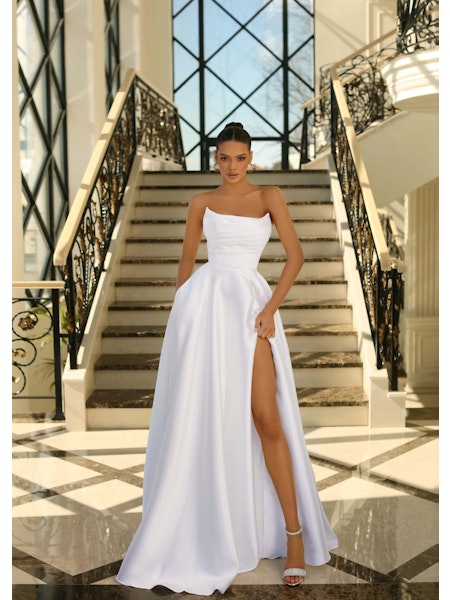
For brides drawn to modern, relaxed or minimalist styling, a sheath or column gown is worth trying. These silhouettes fall more closely to the body and create an uninterrupted vertical line, which can look especially striking on petite brides.
Crepe, satin and lightweight lace are beautiful fabric choices for this shape. A column dress can be understated, but it never has to be plain. Consider a low back, textured lace, delicate buttons or a detachable overskirt if you would like two distinct looks across the day.
Petite brides can absolutely wear a ball gown. The question is not whether you are allowed to wear one, but whether the gown feels balanced and comfortable when you move. A structured bodice with a waist that sits in the right place can create a beautiful shape, while a skirt with controlled volume keeps the look polished.
If you love the drama of a fuller skirt, try gowns with lighter layers and avoid letting too many oversized details compete for attention. You should be able to see yourself before you see the dress.
Necklines are often overlooked, yet they can change the feel of a wedding dress in seconds. A V-neckline creates a lovely vertical line and can make the torso appear longer. It can be soft and subtle or more dramatic, depending on what feels comfortable and true to your style.
Sweetheart necklines are another popular choice, particularly for brides who want a romantic and feminine finish. They shape the décolletage and pair beautifully with fitted, A-line and fuller skirts. For a clean, fashion-led look, a square neckline can offer structure and definition without feeling overly formal.
Strapless gowns can also look stunning on petite brides, especially when the bodice is expertly fitted. The most important thing is support. You want to be able to hug your guests, lift your arms for photos and dance without constantly adjusting your gown.
Small details can have a surprisingly big impact on proportion. Vertical seams, a centre-front slit, fine pleating and buttons running down the back can guide the eye up and down rather than across. These touches can add interest without making the dress feel busy.
Lace is beautiful, but scale matters. Delicate lace motifs or patterns placed thoughtfully through the bodice and skirt often feel more harmonious than very large appliqués all over the gown. Likewise, a narrow belt or a subtle waist seam may define your shape more naturally than a wide horizontal feature.
Be thoughtful with layers, ruffles and oversized bows. There is nothing wrong with a bold detail if it suits your personality, but try it on in the full gown before deciding. A detail that photographs beautifully may feel different once you are walking, sitting and moving around.
Most wedding dresses are designed with extra length so they can be altered for the individual bride. That is normal, and it gives you the opportunity to make the gown feel made for you. The hem should be adjusted with your wedding shoes on, whether you choose heels, platforms, sandals or a lower style.
A train is not off limits for petite brides. A chapel-length train can add beautiful ceremony without dominating a sleeker silhouette, while a detachable train or overskirt gives you flexibility between the ceremony and reception. If you are planning an outdoor wedding, consider how the fabric will move across grass, sand or a timber deck.
Your shoes should support the way you want to feel, not just add height. A comfortable heel can subtly change posture and the way a gown falls, but comfort matters when your wedding day is long. Bring your shoes, or a pair with a similar heel height, to fittings wherever possible.
The easiest way to find your dress is to arrive with a few inspiration images, then stay open to expert suggestions. Tell your stylist about your venue, the season, the mood of the day and the features you would love to highlight. Just as importantly, share anything you do not want to feel self-conscious about.
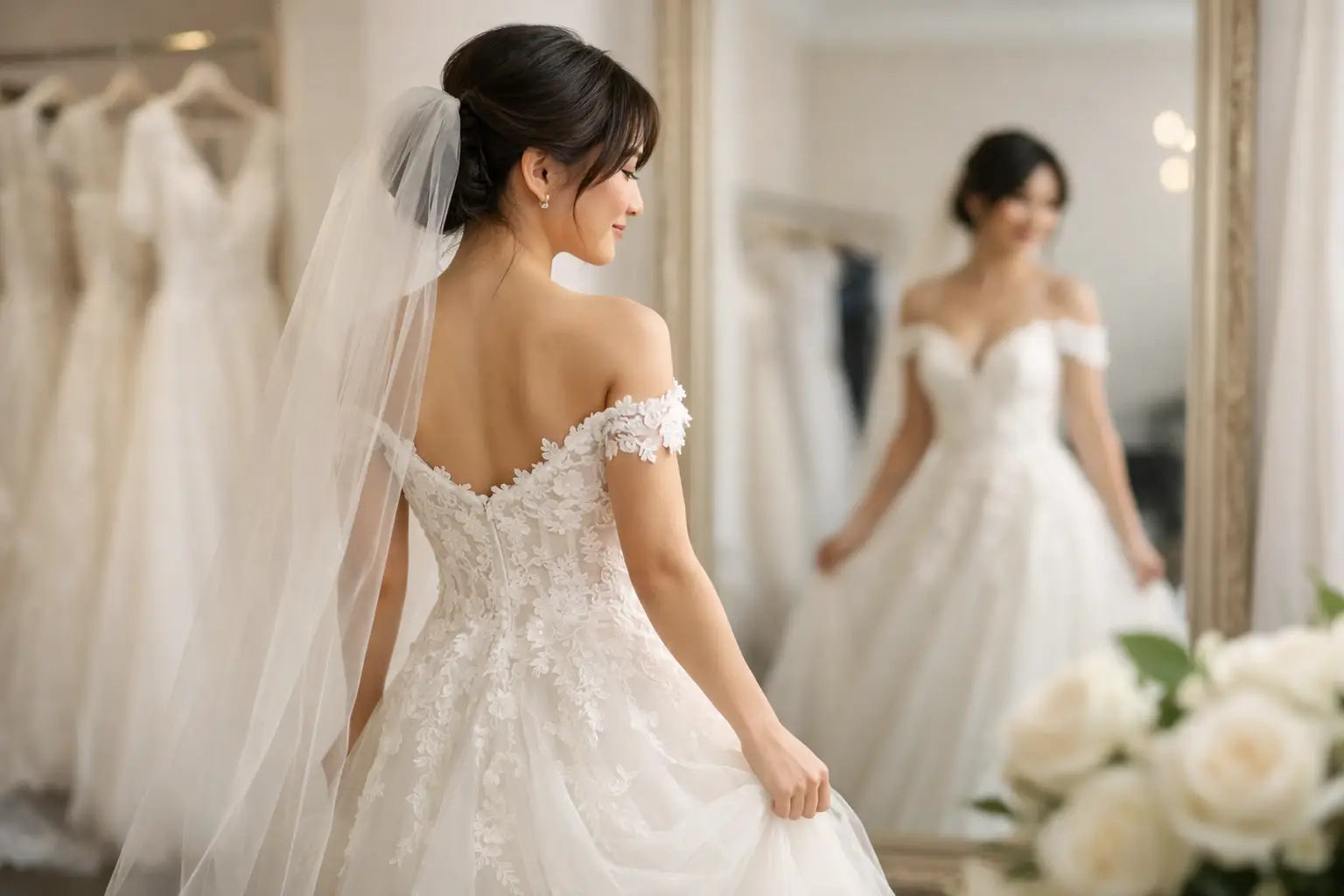
At The Bridal Company, an appointment gives you the space to try different silhouettes and compare them properly, rather than making a rushed decision from a single mirror moment. Move in each gown. Sit down, turn sideways, raise your arms and imagine greeting the people you love. The dress should feel special, but it should also let you enjoy every part of the celebration.
Do not judge a sample gown solely by its current fit. Clips and careful styling can help you understand the intended silhouette, while alterations refine the final result. Focus first on the neckline, fabric, shape and how the dress makes you carry yourself.
The best choice is the one that makes you stand taller because you feel completely at home in it. Book your bridal appointment, try the shapes that catch your eye and let the right dress surprise you.