Cart
0
You may also like
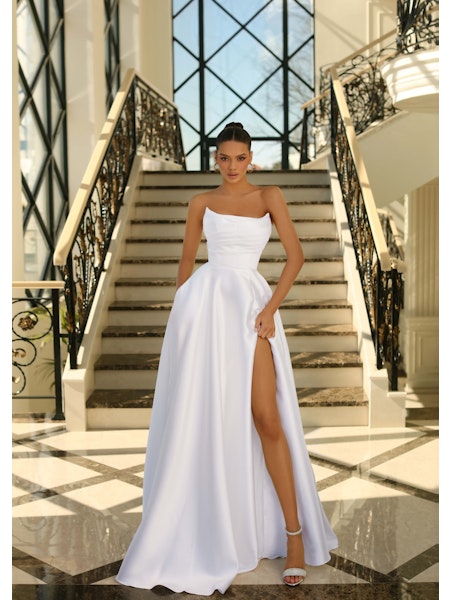

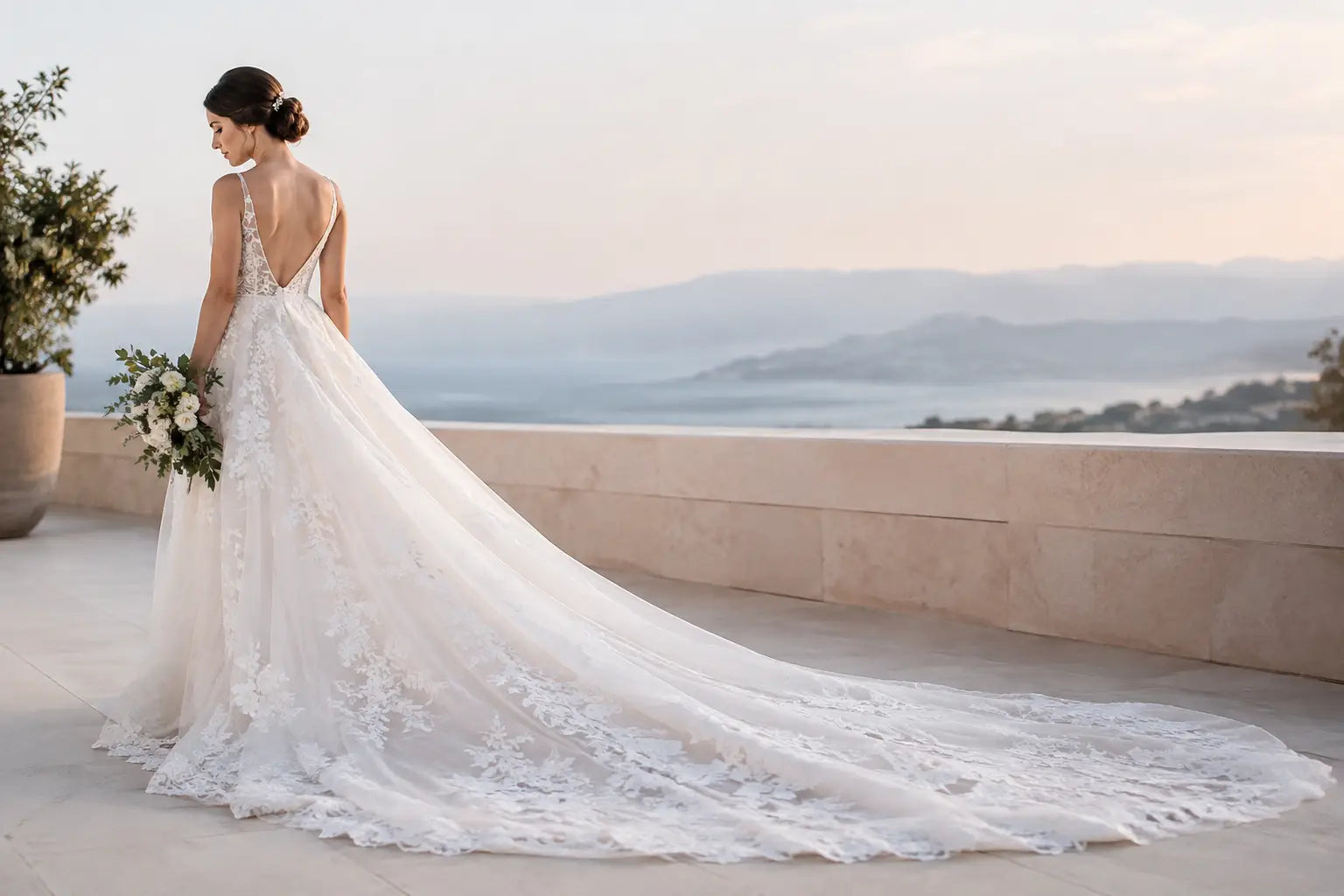
Wedding dress trains can change the entire feeling of a gown. A short train gives a sleek, effortless finish; a long one brings ceremony, movement and that unforgettable aisle moment. The right choice is not simply about choosing the most dramatic option. It is about finding a train that suits your venue, your dress style and how you want to move, mingle and celebrate.
For many brides, the train is the detail that turns a beautiful wedding dress into their wedding dress. It deserves just as much thought as the neckline, silhouette and fabric.
A train is the extra length of fabric that extends beyond the hem at the back of a wedding gown. It can be built into the skirt, begin at the waist, flow from the shoulders, or be added as a detachable piece. Every option creates a different effect in photographs and feels different when you walk.
Also called a brush train, the sweep train is the most subtle option. It extends just beyond the dress hem and lightly skims the floor behind you. This style brings a soft bridal finish without requiring a large amount of extra fabric.
A sweep train is a lovely choice for a relaxed ceremony, a smaller wedding, an elopement or a bride who wants to move around freely. It works particularly well with fitted crepe gowns, simple satin dresses and modern minimalist styles. Because it is short, it is also practical for venues where you will be moving between spaces or spending time outdoors.
A court train is slightly longer than a sweep train, usually extending around 30 to 45 centimetres behind the gown. It has more presence in photos while still feeling manageable and refined.
This is a versatile middle ground for brides who want their dress to look undeniably bridal without feeling overwhelmed by a long train. A court train can suit a garden ceremony, winery celebration, chapel wedding or contemporary reception venue. It pairs beautifully with A-line, fit-and-flare and softly structured ballgown silhouettes.
The chapel train is one of the most popular wedding dress train lengths because it creates a classic, romantic look while remaining easy to style for a full wedding day. It generally extends around one metre from the back of the dress, offering enough length for a beautiful entrance and striking ceremony photos.
If you picture fabric trailing elegantly behind you as you walk down the aisle, a chapel train may be the one. It has a lovely sense of occasion without the formal scale of a cathedral train. Brides often choose this length for traditional ceremonies, elegant receptions and gowns with lace, beading or layered tulle.
A cathedral train is made for drama. It extends well beyond a chapel train and creates a grand, formal finish that makes a statement from every angle. Think sweeping fabric, a longer aisle and photographs that capture the full scale of the gown.
This style suits brides who love a more formal look and have a venue with enough space for the train to sit beautifully. A cathedral train can be breathtaking in a church, grand hall or wide-open ceremony setting. It does, however, need a little planning. Someone may need to arrange it before you walk, and you will want a secure way to lift or bustle it after the ceremony.
A Watteau train falls from the shoulders or upper back rather than growing from the skirt. It has a cape-like effect and can bring a fashion-forward, editorial feel to a clean, simple gown. This style is ideal for a bride who wants a distinctive entrance without changing the shape of her dress.
Detachable trains offer another flexible option. You can wear the train for the ceremony and portraits, then remove it for the reception to reveal a lighter look underneath. Depending on the design, a detachable train can add volume, length, lace detail or a dramatic bow at the waist. It is a smart option when you love the idea of two bridal looks while keeping one gown.
Your venue should influence your decision, but it should not dictate it completely. The dress still needs to feel like you. What matters is understanding the trade-off between visual impact and practicality.
For a beach wedding on the Gold Coast, a shorter train or a removable option can make moving across sand more comfortable. Light fabrics such as chiffon, tulle and crepe tend to move beautifully in a coastal breeze, while a heavily layered train may collect sand more easily. If your heart is set on a longer train, save its most polished moment for the ceremony and professional photographs.
Garden weddings call for similar thought. Grass, gravel and uneven paths can catch delicate lace or fine tulle, so a court or chapel train often offers a beautiful balance. For a formal indoor setting, you have more freedom to choose a fuller or longer train, especially if you are planning a grand entrance and a traditional aisle walk.
Also consider the transition from ceremony to reception. Will you be walking down stairs? Moving through a crowd? Dancing for hours? A train does not have to limit your celebration, but it does need a plan.
A bustle is the way a train is secured up after the ceremony, allowing you to walk and dance without it trailing behind you. It is a small practical detail with a big impact on how comfortable you feel later in the day.
The best bustle depends on the fabric, train length and shape of the gown. Some create a neat fold under the skirt, while others lift the train over the top of the dress to preserve details such as lace edging or decorative buttons. A fuller skirt may disguise a bustle easily, while a fitted gown may need a more considered arrangement to maintain its line.
When you try on dresses, walk, turn and sit as naturally as you can. Ask to see how the train looks when it is lifted. Bring along someone who will be with you on the day, as they may be the person helping you secure it after the ceremony. A quick practice before the wedding makes the changeover far less stressful.
The shape of your dress affects how a train reads from behind. A mermaid or fit-and-flare gown often looks incredible with a train that begins low at the back, emphasising the curve of the silhouette before flowing out. A-line dresses can carry almost any train length, from a delicate sweep to dramatic cathedral styling, because the skirt naturally creates balance.
Ballgowns already have volume, so the train can feel particularly grand without needing to be excessively long. If you prefer a sheath or column gown, a soft sweep, chapel train or Watteau detail can add movement while preserving that sleek, lengthened shape.
Fabric matters too. Satin holds a clean, sculptural line. Crepe falls smoothly and suits modern, understated gowns. Lace can make a train feel richly detailed, especially when the pattern continues beyond the hem. Tulle creates softness and float, while beading catches the light beautifully but can add weight. There is no wrong fabric choice, only the question of what feels comfortable and true to your style.
A train is at its best when it is intentionally arranged. Before you begin walking down the aisle, take a moment for your support person or photographer to gently spread the fabric so it sits evenly. This is especially worthwhile for longer trains, layered skirts and lace designs with a defined edge.
Your portrait time is where a train can really shine. Standing still with the skirt fanned out gives your photographer shape and texture to work with. Walking away from the camera, turning slightly over your shoulder or holding the train lightly at one side can create natural movement without looking overly posed.
Do not feel that every image needs the train displayed at full length. Some of the most beautiful photographs show only a glimpse of it as you walk, hug loved ones or hold hands with your partner. The train should enhance the moment, not take it over.
It is easy to be drawn to a dramatic train when you first see it in the mirror, and sometimes that is exactly the right choice. But the gown should also make you feel confident when you move. Take a few steps, imagine your ceremony entrance and picture yourself dancing at the end of the night.
At The Bridal Company, an appointment gives you time to compare different gown shapes and train lengths with experienced guidance. Try the short train you thought you wanted, then try the longer one that catches your eye. The right choice is the one that gives you that special bridal feeling while still letting you enjoy every part of the day.