Cart
0
You may also like


Your wedding gown may spend more time in a car, hotel room or aircraft than you expect. A beautiful dress can arrive looking just as stunning as it did at your fitting, but it needs a little planning from the moment you leave home. Knowing how to transport a wedding gown properly helps protect delicate fabrics, detailed beading, long trains and carefully fitted bodices from avoidable creases, marks and damage.
The best approach depends on your gown, the distance you are travelling and whether you are driving or flying. A lightweight crepe gown needs different handling from a full tulle ball gown or a heavily embellished fitted design. Start with the garment bag, give the dress its own space, and plan for a final refresh once you arrive.
Ask your bridal stylist to show you the best way to lift, fold and hang your specific gown before you leave. This is particularly helpful for dresses with boning, lace appliqué, detachable sleeves, buttons or a dramatic train. You do not want to work out the folding method in a busy car park on the morning of the wedding.
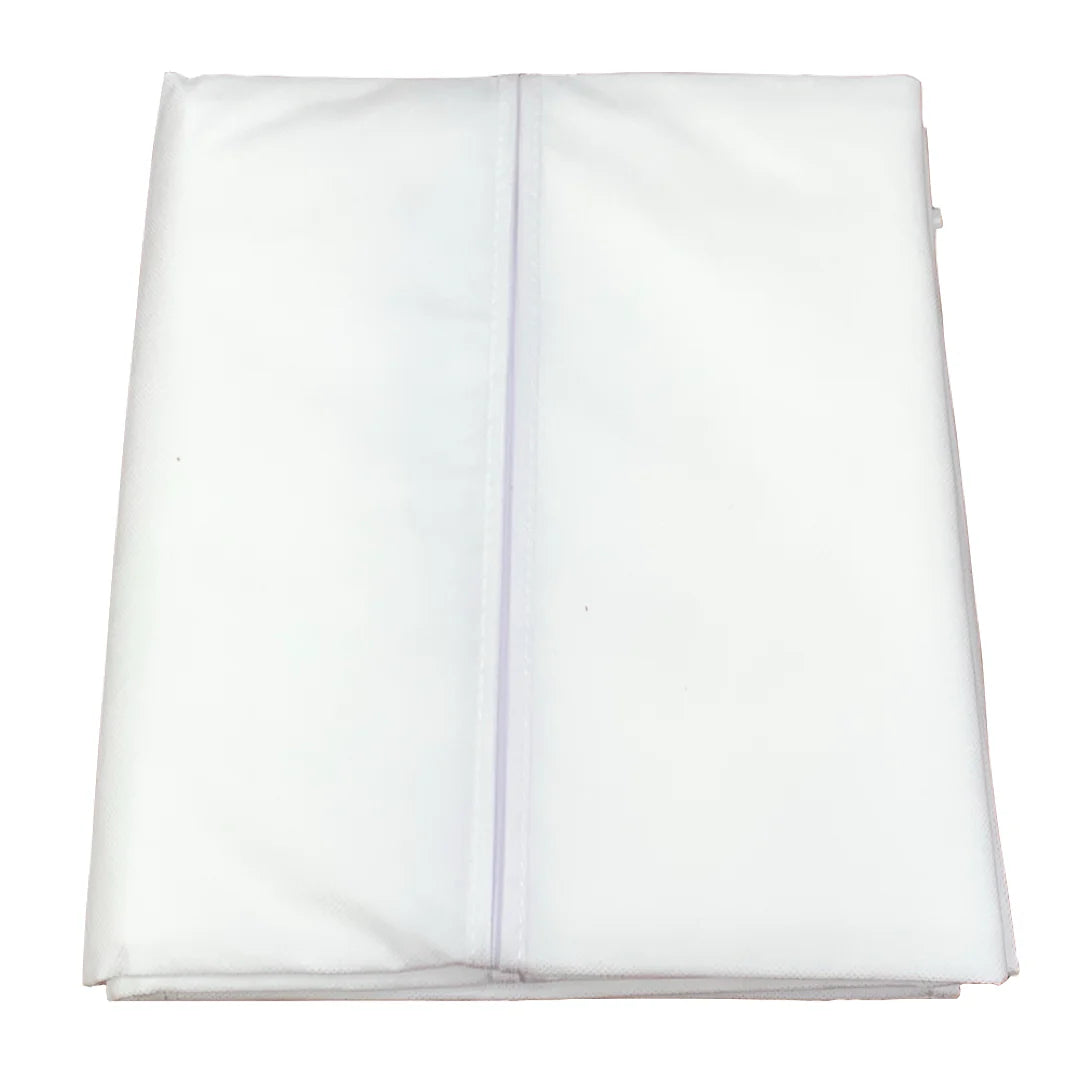
Your gown should travel in a clean, breathable garment bag that is long enough to protect the hem. Avoid plastic dry-cleaning covers for long periods, especially in warm weather. Plastic can trap moisture and may catch on fine details. A quality fabric garment bag keeps dust away while allowing the gown to breathe.
Before packing, make sure your hands are clean and free from moisturiser, fake tan, makeup or food. It sounds obvious, but pale bridal fabrics show small marks quickly. Keep the gown well away from pets, perfumes, sprays and anything that could snag the fabric.
If your dress has a long train, gently gather it upward rather than allowing it to drag or bunch at the base of the bag. Your stylist can advise whether the train should be folded in soft layers, looped over an arm or secured with its bustle points. Never force sharp folds into a structured skirt or bodice.
Driving is often the simplest option because you have more control over the gown and can keep it close by. The key is creating a clean, uncluttered space where nothing can crush, spill on or catch the dress.
For many gowns, the back seat is the safest place. Hang the garment bag from the rear grab handle if it sits high enough for the hem, then lay the lower part of the dress softly across the seat. If the gown is very full, it may need the entire back seat. Move bags, jackets, drink bottles and any loose items elsewhere before loading it.
For a larger vehicle, you may be able to lay the garment bag flat across folded rear seats. Place a clean white sheet or blanket underneath first, and avoid putting anything on top. The boot can work for a compact gown only if it is spotless, completely dry and has enough room for the dress to lie without being bent tightly. Never place your wedding gown beside emergency supplies, tools, sports gear or anything with rough edges.
Turn the air-conditioning on during warm Queensland weather, but do not point a strong vent directly at the gown for the whole journey. Excess heat can be especially unkind to delicate fabrics, glue-set embellishments and fine tulle. If you stop along the way, keep the car locked and out of direct sun where possible.
Try to travel with a support person who understands that the gown has priority. Their job can be as simple as keeping drinks and snacks away from the dress, opening doors carefully and helping carry the garment bag into your accommodation.
If you are travelling for a destination wedding, treat your gown as a carry-on item wherever possible. Checked luggage is exposed to rough handling, delays and the possibility of being sent somewhere other than your destination. Even if your gown bag looks large, contact your airline before departure to ask about its current policy for wedding dresses and cabin storage.
Policies vary between airlines and aircraft, so do not rely on what worked for a friend. Some planes have hanging space, while others may require the gown to be carefully folded in an overhead locker. Arrive early, let the check-in team know you are travelling with a wedding gown, and remain polite but prepared to follow the crew's instructions.
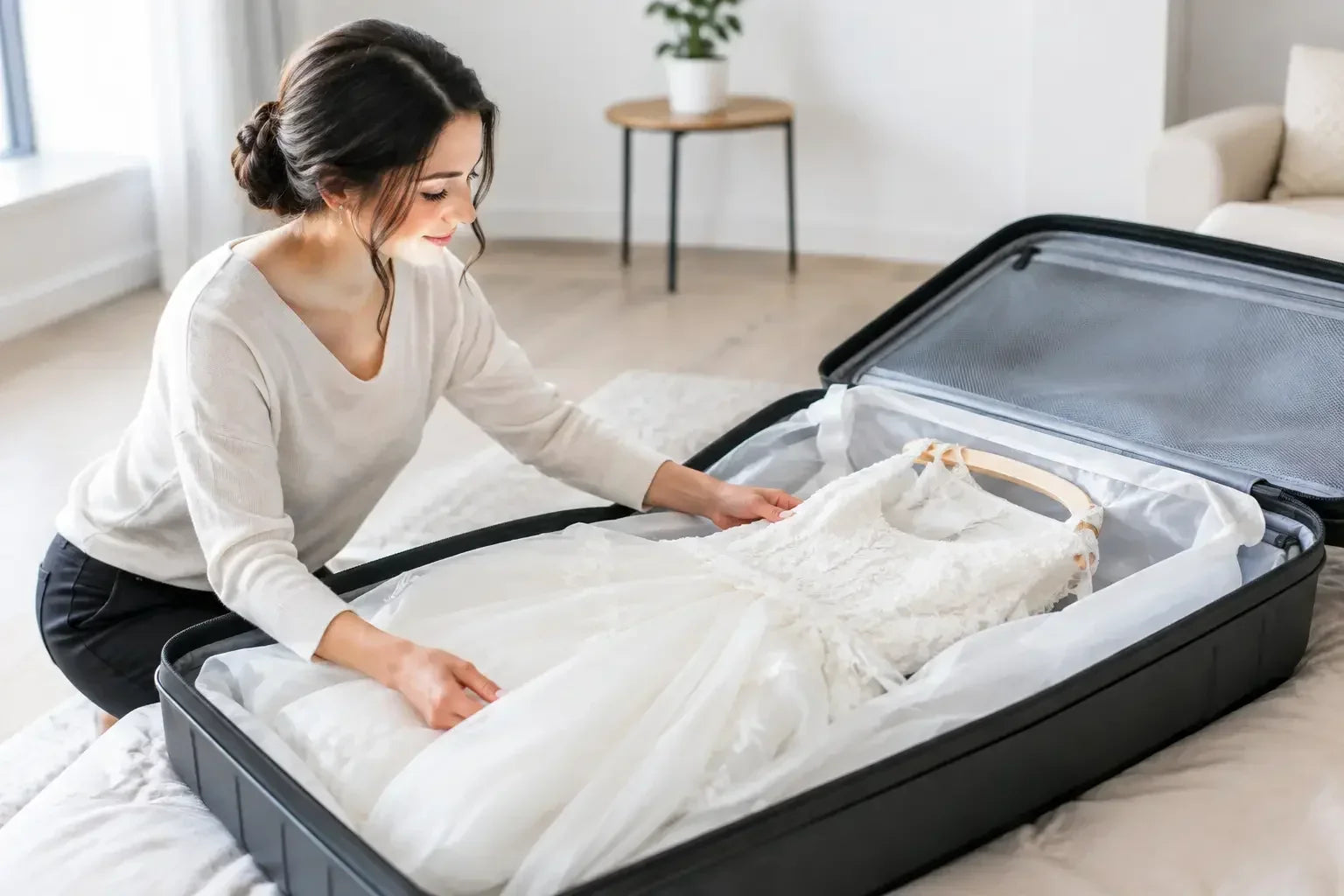
If you need to fold the gown for the flight, use broad, soft folds rather than tight creases. Place acid-free tissue paper between layers where practical, particularly around lace, beading and delicate sleeves. Keep the bodice supported and avoid folding directly through heavily structured areas.
Pack your veil, detachable accessories and shoes separately. Veils can snag on beading, and shoes should never travel against the gown. A small bridal emergency kit in your carry-on is useful too: include safety pins, fashion tape, a small sewing kit, stain-removal wipes suitable for white fabric, and a lint roller. Check airline rules before packing any liquids or sharp tools.
Do not leave the gown packed until the wedding morning. As soon as you reach your accommodation, take it out of its bag with clean hands and hang it somewhere safe, high and dry. Choose a room away from cooking steam, open windows, makeup stations and energetic children.
Most travel creases will relax once the gown has time to hang. Give it at least a full day if you can. For a silk, satin, tulle or embellished gown, use a professional steaming service or ask your venue whether they can recommend someone experienced with bridalwear. High heat and poor technique can leave water marks, flatten texture or loosen decorations.
If you are steaming the gown yourself, test the steamer on a hidden section or a spare fabric swatch first. Keep the steamer moving, work from the inside of the skirt where possible, and do not press a hot iron directly onto lace, tulle, appliqué or embellishment. A clean white cloth between the iron and fabric is essential for any fabric that can be pressed, but professional help remains the safer choice for complex gowns.
Once the gown is ready, keep it in its garment bag until it is time to dress. Hang it from a sturdy hook, not a flimsy wardrobe rail crowded with other clothes. Your bridal party can then help lift the skirt clear of the floor while you step in, protecting the hem before the celebrations even begin.
Transport is easier when you avoid last-minute packing. Put the gown, veil, shoes, jewellery and undergarments in one clearly designated area the day before you leave. If you are staying overnight, take a few photos of how the dress is packed so you can repeat the arrangement after steaming.
It is also wise to plan your getting-ready space. A light, uncluttered room with a full-length mirror gives your gown the best chance of looking its best in photographs. Keep breakfast, bubbly and makeup well away until you are dressed, and ask someone reliable to be the only person handling the garment bag.
Your wedding gown deserves calm, careful handling, not a rushed squeeze between bags on the big day. Prepare early, give it room to travel and allow time for it to settle at your destination. Then you can focus on the moment that matters most: putting on the dress and feeling completely ready to walk down the aisle.