Cart
0
You may also like

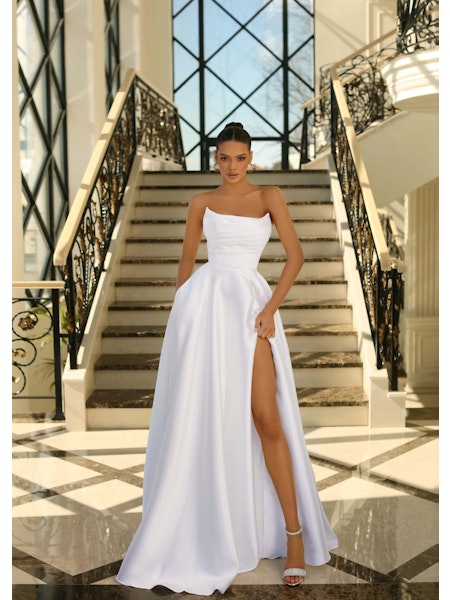

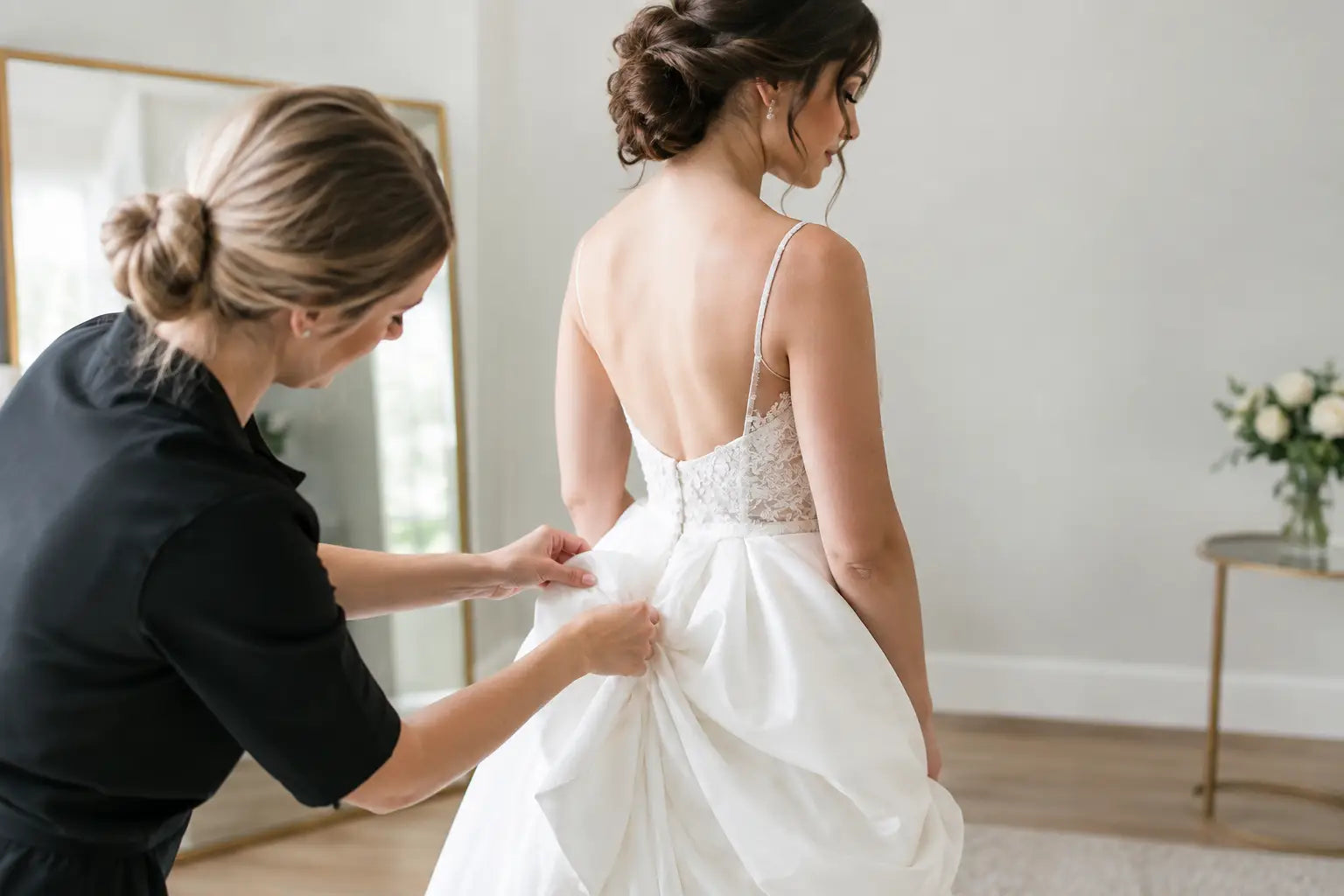
Your ceremony is finished, the hugs are happening, and you are ready to head to the dance floor - but your train is still sweeping the ground behind you. Knowing how to bustle a wedding dress before the big day means that moment feels calm, not chaotic. A bustle lifts and secures the train so you can move, mingle, eat and dance with far more ease while keeping the beautiful shape of your gown intact.
A bustle may look simple once it is in place, but every wedding dress is different. The fabric, train length, silhouette and construction all affect how it needs to be secured. The best approach is to understand your specific bustle, practise it with your support crew, and keep the process organised for the day itself.
A bustle is a set of discreet attachment points added to the back of a gown during alterations. These can include buttons, loops, hooks, ribbons or clear fasteners. When connected, they lift the train off the floor and create a fuller, gathered effect at the back of the dress.
It is not one universal technique. A dramatic ball gown with layers of tulle needs a different approach from a sleek crepe fit-and-flare dress. Some bustles create soft folds that sit over the skirt, while others tuck fabric underneath for a cleaner finish. That is why the person fitting the dress should show you exactly where each attachment point sits and in what order to fasten it.
Your bustle is designed for your gown, so do not rely on a social media tutorial as your only plan. It can be helpful for understanding the general idea, but it cannot account for your dress's fabric, weight or fastening placement.
The key to a smooth bustle is preparation, rather than trying to work it out once the reception has started. Ask a trusted person - often a maid of honour, parent, sister or close friend - to attend your final fitting. They should watch the process, take clear photos or video if permitted, and practise while the dress is on you.
Before anyone handles your gown, they should wash and dry their hands. Makeup, food and drinks have a way of appearing everywhere on a wedding day, so it is worth taking a minute to check hands are clean. Find a spot with enough room for the train to be spread out flat, away from heels, bags and busy foot traffic.
Have someone gently lift the train from the centre rather than pulling at one edge. Pulling unevenly can make it harder to find the loops or buttons and may put unnecessary strain on delicate fabric.
Most bustles work best when secured in a particular sequence. Your fitting professional may begin at the centre back, then work outwards, or start with the lowest point before attaching upper points. Follow the method you were shown.
Buttons may be hidden beneath fabric folds, while loops can be tiny and easy to miss in low light. Ask your support person to familiarise themselves with every attachment point beforehand. A photo of each point, plus one wide photo showing the finished bustle, is often more useful than trying to remember it all later.
If ribbons are used, make sure the person helping knows which colours or labels pair together. They may look similar, but tying the wrong sections can change the drape of the train.
As each point is attached, gently shake or smooth the fabric so it falls naturally. The bustle should look intentional, not pulled tight or bunched into one spot. Step back and check the gown from behind, then turn slowly to make sure the sides sit evenly.
You should also walk a few steps, sit down briefly and take a small turn. A bustle that looks perfect while standing still may feel restrictive once you start moving. It is much easier to adjust at the fitting than discover a problem halfway through your first dance.
Even a well-made bustle can come loose after hours of hugs, dancing and movement. Your support person does not need a huge kit, but it is sensible to have a few practical items close by: small safety pins, a needle and thread in a suitable shade, spare clear fasteners if recommended at your fitting, and a phone with the bustle photos saved.
Safety pins are a short-term backup, not the preferred way to bustle a gown. If one must be used in an emergency, place it carefully and keep it away from areas where it could catch your skin or snag delicate fabric. Never force a fastening that will not connect, as this can tear a loop or pull a button loose.
You do not need to memorise every bustle style, but knowing the basics helps you ask the right questions at your fitting.
An American bustle, sometimes called an over-bustle, lifts the train and secures it on top of the skirt. It creates visible draping and can suit gowns with a full skirt or detailed fabric at the back. A French bustle, also known as an under-bustle, tucks the train beneath the outer skirt for a softer, more concealed effect.
A ballroom bustle is designed to make the train disappear into the shape of the skirt, which can be ideal for a more formal ball gown silhouette. An Austrian bustle gathers the centre of the train using a drawstring-style method, creating a vertical ruched effect. There are also variations and combinations, especially on gowns with long or layered trains.
The right choice depends on the dress. Heavy satin, beading, lace appliqué, tulle layers and a structured skirt all behave differently. Let the gown's design lead the decision rather than choosing a bustle style based solely on a photo.
The most helpful thing you can do is appoint one main bustle person and one backup. Too many hands around the gown can make the process slower and more confusing. Choose people who are likely to be present after the ceremony and comfortable following instructions without rushing.
At the fitting, ask them to bustle the dress themselves while you are wearing it. Watching is useful, but doing it once or twice builds confidence. They should practise locating the fastenings, lifting the train safely and checking the finished shape.
If your wedding includes a quick change of location or you plan to bustle immediately after the ceremony, allow time for it in the schedule. Five unhurried minutes in a calm room is far better than attempting it in a crowded doorway while guests are waiting.
Most brides keep their train down for the ceremony, portraits and any photos where they want the full impact of the gown. The bustle usually goes up before the reception entrance, before walking across grass or gravel, or before the dance floor opens.
There is no fixed rule. If you have a long gap between ceremony and reception, you might bustle sooner for comfort, then release it again for selected photos if that suits your plan. Just remember that repeated fastening and unfastening can take time, particularly with a detailed multi-point bustle.
Outdoor weddings deserve extra thought. A train can collect leaves, dirt or moisture, even during a short walk. Having the bustle ready early may make moving between spaces easier, while a helper can lift the skirt over particularly uneven ground.
If you notice pulling, sagging, uneven draping or a fastening that repeatedly comes undone at your final fitting, speak up. A bustle should support the train without making you feel trapped in the dress. It may need an adjustment, an extra support point or a different configuration.
Be especially honest about your reception plans. If you want a packed dance floor, are wearing high heels, or expect to move between indoor and outdoor spaces, your bustle needs to cope with real movement. A gown should still feel like yours when the party begins.
When choosing your wedding dress, it is also worth asking about the train early. At The Bridal Company, our experienced showroom team can help you consider how a gown will feel from ceremony to celebration, so you can choose a style that suits the whole day.
A little rehearsal turns bustling from a fiddly reception task into a quick, confident change. Give your chosen helper clear instructions, keep those reference photos handy, and then get back to the moments that matter - celebrating in the dress you love.