Cart
0
You may also like

Some brides know within 20 minutes. Others need a second or third try-on before everything clicks. If you're wondering how many bridal appointments needed before you find your dress, the honest answer is usually fewer than you think - but it depends on how prepared you are, how open-minded you stay, and whether you're shopping with the right support.
For most brides, one to three bridal appointments is enough. That range gives you time to get a feel for silhouettes, narrow down what actually suits you, and come back with a clearer head if needed. It also stops the search from dragging on so long that every gown starts blending into the next.
A first appointment is often about discovery. Even if you've saved dozens of inspiration photos, trying gowns on in person tells a different story. Necklines sit differently on every body, fabrics move in ways photos can't show, and dresses you swore you wouldn't like can end up being front-runners.
A second appointment is useful when you've shortlisted a few favourites but want to compare them properly. This is often the appointment where a decision happens because you've already moved past the first wave of excitement and can focus on fit, comfort, and how you want to feel on the day.
A third appointment can help if you started very early, changed your plans, or felt rushed the first time around. It can also make sense if you want one more look with a trusted guest before locking it in. Beyond that, extra appointments are sometimes helpful, but not always productive.
Some brides walk into a showroom with a clear sense of what they want and a realistic understanding of what suits them. They are open to expert guidance, they don't overcomplicate the process, and when they find a gown that feels right, they trust that feeling.
If that sounds like you, one appointment may genuinely be all you need. This is especially true if the showroom has a large in-store range and experienced stylists who can quickly guide you towards shapes and details that work. A well-run appointment saves time because you're not left wandering through endless options on your own.
There is also something to be said for momentum. When you find a gown that makes you stand taller, smile without forcing it, and stop comparing everything else, that's worth paying attention to.
Two appointments are often the sweet spot. The first helps you learn. The second helps you choose.
This works well for brides who start with strong ideas but discover they need a bit of recalibration. Maybe you arrived convinced you wanted fitted crepe and ended up loving soft tulle. Maybe you thought strapless was the dream, then realised sleeves or straps felt more secure and more like you.
A second visit gives you space to reflect without losing direction. You can come back focused, try on your top contenders again, and judge them against what matters most - comfort, shape, ease of movement, and whether you can picture yourself wearing that gown for the full celebration, not just for a mirror photo.
There are situations where more than two or three appointments can be reasonable. If your wedding style changes, if you're shopping for a very specific look, or if you started browsing before you were truly ready to decide, the process can naturally take a bit longer.
It can also happen if too many opinions are involved. Brides who bring a large group to the first appointment sometimes leave feeling more confused than when they arrived. Everyone means well, but too much commentary can pull you away from your own instincts.
Sometimes more appointments are needed because the bride is still deciding what she wants the day to feel like. A beach ceremony, formal venue, elopement or garden wedding all lend themselves to different choices. If the vision is still shifting, the dress decision may take longer too.
That said, needing more appointments is not automatically a sign that you're being thorough. Sometimes it's a sign that you're over-shopping.
There is a point where more trying on stops being helpful. If every dress starts to look similar, if you're forgetting what you liked at one appointment by the next, or if you keep comparing a very good option to a vague imaginary gown that may not exist, it's worth pausing.
Another clue is decision fatigue. You might have already found a gown you love, but because you keep looking, you're creating doubt instead of clarity. This is incredibly common. Bridal shopping is emotional, and when something matters this much, it can feel safer to keep searching than to commit.
But too many appointments can drain the excitement from the experience. What should feel special starts to feel like homework. The goal is not to try on the most dresses possible. The goal is to find the right one and feel great about it.
If you want fewer appointments and better results, preparation matters. Come in with inspiration, but don't cling to it too tightly. A few saved photos are helpful. A rigid checklist of exact features can slow you down.
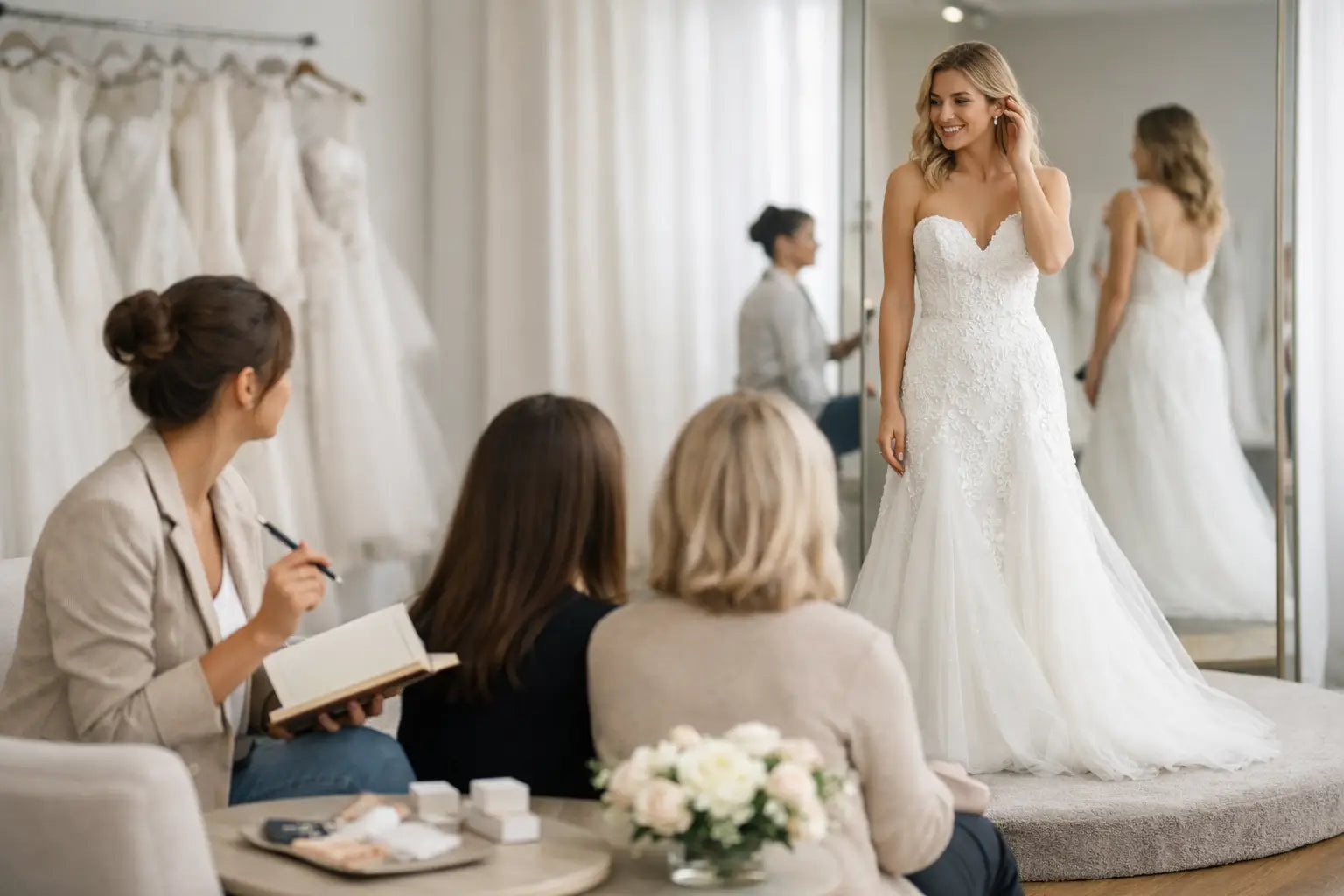
Wear good underwear, bring the shoes height you expect to wear if you can, and think carefully about who comes with you. One or two supportive people usually works better than a full audience. You want honest feedback, not a running panel discussion.
It also helps to have a clear budget range and a rough idea of your venue, season and overall wedding style. That lets your stylist guide you towards gowns that make sense for your day as well as your taste. When a bride is open, prepared and well guided, the appointment becomes much more efficient.
If you're unsure on style, two appointments is often ideal. The first is your fact-finding mission. You try a mix of silhouettes, fabrics and details to work out what actually flatters you and feels right.
The second is where you refine. Instead of starting from scratch, you're building from what you've already learned. This approach is far more useful than booking multiple first appointments at different places and repeating the same uncertainty over and over.
A strong showroom experience can make a huge difference here. At The Bridal Company, many brides are surprised by how quickly their shortlist becomes clear once they are guided through a wide in-store range with experienced help. Sometimes uncertainty is not about having too few options - it's about not seeing the right options together in one place.
You should stop shopping when you have a gown that ticks your real boxes, not every imaginary one. It suits your shape, matches the tone of the wedding, feels comfortable, and most importantly, feels like you.
That doesn't always mean tears or a dramatic movie moment. Some brides do get emotional. Others simply feel calm and certain. Both reactions are valid.
If you keep looking after that point, make sure there's a genuine reason. Wanting to be 100 per cent certain is normal, but certainty usually comes from comparing your top choices thoughtfully, not from trying on another 25 dresses.
Treat bridal appointments like stages rather than endless shopping trips. The first is discovery. The second is decision. The third, if needed, is confirmation.
That mindset keeps the process moving and helps you avoid the trap of browsing for the sake of browsing. It also gives you permission to trust your own judgement instead of thinking you must keep going just because bridal shopping feels like it should take longer.
Every bride is different, but most do not need a marathon search. They need a supportive appointment, a great range to try on, and enough clarity to recognise the right dress when it's in front of them.
If you're about to book your first appointment, go in excited, stay open-minded, and remember this: finding your gown is rarely about how many times you shop. It's about whether each appointment helps you move closer to a confident yes.